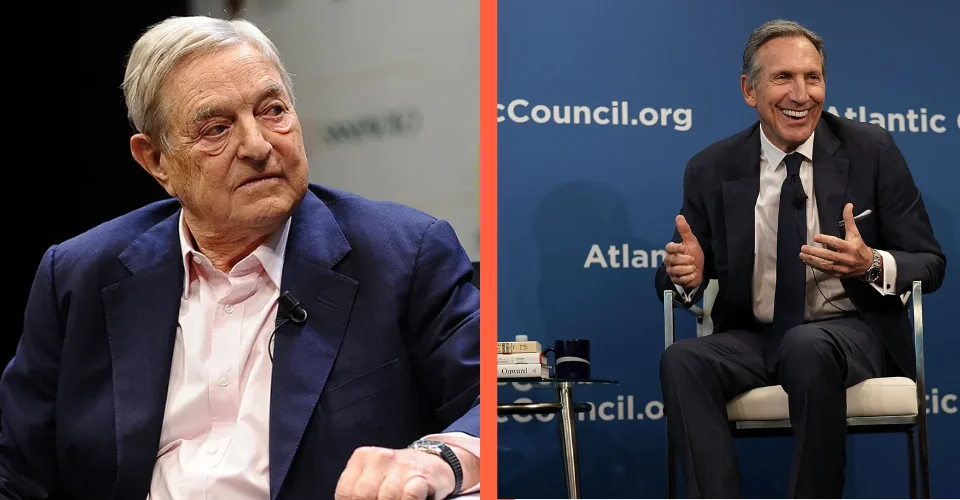
Howard Schultz and George Soros Two Influential Figures Who Shaped Business Finance and Society

Howard Schultz and George Soros are two prominent figures whose careers have influenced different areas of American business and public life. Schultz became widely recognized for transforming Starbucks into a global coffeehouse brand, while Soros established his reputation as an influential investor, financial strategist, and philanthropist. Although their professional paths are considerably different, both have demonstrated how business decisions, financial resources, and personal philosophies can extend beyond individual careers.
The connection between Howard Schultz and George Soros is particularly interesting because they represent two distinct approaches to influence. Schultz built an international business by emphasizing customer experience, brand identity, and workplace culture. Soros developed an investment career around financial markets, economic analysis, and a broader philosophy of social and political engagement.
Understanding their backgrounds, accomplishments, and perspectives provides a useful look at how influential individuals can shape industries and participate in wider conversations about economic opportunity and social responsibility.
This article explores their individual journeys, professional achievements, financial philosophies, philanthropic activities, and broader significance in American society.
Who Are Howard Schultz and George Soros?
Howard Schultz and George Soros are internationally recognized business figures, but their professional identities come from different industries.
Howard Schultz: The Entrepreneur Behind Starbucks
Howard Schultz is an American businessman best known for his leadership at Starbucks. Born in Brooklyn, New York, in 1953, Schultz grew up in a working-class family.
His early experiences influenced his views about employment, opportunity, and business responsibility. After graduating from Northern Michigan University, he worked in sales and marketing before joining Starbucks in 1982.
At that time, Starbucks was primarily a retailer of coffee beans and equipment. Schultz became interested in the Italian coffeehouse experience after visiting Milan and seeing how coffee shops could function as social gathering places.
He eventually pursued his own coffeehouse venture before returning to Starbucks and helping transform the company into an international brand.
His leadership helped establish Starbucks as a major presence in the global food and beverage industry.
George Soros: The Investor and Philanthropist
George Soros is a Hungarian-American financier, investor, and philanthropist born in Budapest in 1930.
Soros survived the Nazi occupation of Hungary before moving to England in 1947. He studied at the London School of Economics, where he encountered the philosophical ideas of Karl Popper. Those ideas later influenced his thinking about open societies and political institutions.
After beginning his career in finance, Soros established Soros Fund Management and became internationally known for his investment activities.
He also founded the Open Society Foundations, a philanthropic network supporting initiatives involving education, human rights, public health, and democratic governance.
His professional life combines financial investment with substantial involvement in philanthropy and public affairs.
The Connection Between Howard Schultz and George Soros
One reason people search for Howard Schultz and George Soros together is curiosity about their potential connections in American business and politics.
However, it is important to distinguish between documented political developments, professional relationships, and speculation.
Did Howard Schultz and George Soros Work Together?
There is no established public evidence of a direct business partnership between Schultz and Soros or of the two operating a shared company.
Their professional activities have largely developed independently. Schultz concentrated on entrepreneurship, corporate leadership, and public policy, while Soros became known for investment management and international philanthropy.
Their names have also appeared in discussions surrounding American political organizations and election-related activities. Such references should not automatically be interpreted as evidence of a personal relationship.
The 2019 Independent Presidential Campaign Discussion
In 2019, Howard Schultz explored the possibility of running for president as an independent candidate. His potential campaign generated significant political discussion, including debate about whether an independent presidential bid could affect the Democratic Party’s chances in the election.
George Soros has supported various political and civic organizations over the years. However, an organization’s activities should not be attributed directly to every donor associated with it.
A responsible examination of this subject requires distinguishing documented financial contributions, official complaints, public statements, and actual personal involvement.
The broader lesson is that political associations can be complicated. A shared appearance in political reporting does not necessarily establish coordination, friendship, or a business relationship.
Howard Schultz’s Business Philosophy and Leadership Style
Howard Schultz’s business career offers an example of how a relatively small company can become an internationally recognized brand through a combination of customer experience, strategic expansion, and organizational culture.
Building Starbucks Into a Global Coffeehouse Brand
When Schultz joined Starbucks in 1982, the company had a limited retail presence in Seattle. His visit to Italy in 1983 changed his understanding of the coffee business.
He became interested in Italian espresso bars, where customers gathered not simply to purchase beverages but also to socialize and spend time together.
Schultz wanted to introduce a similar experience to American consumers.
After establishing Il Giornale in 1985, he and his investors acquired Starbucks in 1987. The business subsequently expanded beyond its original coffee-bean retail model and developed into a major international coffeehouse chain.
The company’s growth demonstrated several important business principles:
- Brand differentiation: Starbucks developed an identity centered on coffee quality and the customer experience.
- Customer loyalty: Its stores became familiar destinations for customers seeking consistency and convenience.
- Strategic expansion: The company expanded into new markets while developing its product offerings.
- Employee investment: Schultz emphasized benefits and workplace programs as part of the company’s employment philosophy.
- Innovation: Starbucks adopted new technologies and customer engagement strategies as consumer habits changed.
Why Employee Experience Matters in Schultz’s Approach
One of Schultz’s most frequently discussed leadership principles involves the relationship between employee satisfaction and business performance.
He supported initiatives involving healthcare coverage and stock ownership for eligible employees, known within Starbucks as partners.
The underlying idea was that employees should participate in the company’s success rather than simply perform assigned tasks.
This approach offers a useful lesson for modern businesses. Customer satisfaction is often influenced by the people delivering the service. Organizations that invest in training, workplace culture, and employee well-being may be better positioned to build consistent customer experiences.
However, employee-focused policies must also be evaluated alongside operational costs, financial performance, and long-term business sustainability.
Schultz’s Activities Beyond Starbucks
Schultz’s interests extend beyond the coffee industry.
Through the Schultz Family Foundation, established with his wife, Sheri, he has supported initiatives focused on economic opportunity, young people, and veterans.
The foundation’s work illustrates how business experience and private resources can be directed toward social challenges.
His approach to philanthropy reflects a belief that private organizations can contribute to addressing problems that affect communities and the workforce.American Academy of Arts and Sciences+1
George Soros’s Investment Philosophy and Financial Influence
George Soros represents a different kind of business leadership. Rather than building a consumer-facing company, he developed his reputation through financial markets and investment management.
The Development of Soros Fund Management
Soros established his own investment operation in 1970, building on his earlier experience in financial markets.
He became particularly well known for his approach to currency trading, macroeconomic analysis, and identifying opportunities created by changing economic conditions.
His investment philosophy was influenced by his study of philosophy, particularly the work of Karl Popper.
Soros developed the concept of reflexivity, which suggests that market participants’ perceptions can influence economic conditions and that changing economic conditions can, in turn, influence those perceptions.
In practical terms, this means financial markets are not always simple reflections of objective economic information. Investor expectations, confidence, and behavior can help shape market movements.
This perspective became an important part of his investment approach.
The Famous 1992 British Pound Trade
One of the most widely discussed events in Soros’s financial career occurred in September 1992, during the European currency crisis.
Soros and his investment team took a substantial position against the British pound, believing that the currency was overvalued and that the United Kingdom would struggle to maintain its position within the European Exchange Rate Mechanism.
On September 16, 1992, Britain withdrew the pound from the mechanism after intense market pressure.
The event became known as Black Wednesday.
Soros’s investment strategy reportedly generated approximately $1 billion in profit, making the trade one of the most famous currency-market transactions in modern financial history.
The episode demonstrated how macroeconomic analysis, monetary policy, investor expectations, and currency-market pressures can interact.
It also established Soros as a prominent figure in international finance.
Soros’s Approach to Risk and Market Analysis
Soros’s investment philosophy differs from traditional approaches that rely primarily on company earnings, balance sheets, and long-term business fundamentals.
His macroeconomic approach considers broader forces, including:
- Interest rate decisions by central banks.
- Currency valuations and exchange-rate policies.
- Government borrowing and fiscal conditions.
- International capital movements.
- Political developments and economic uncertainty.
- Investor psychology and market expectations.
His experience highlights the importance of understanding how financial systems interact.
For investors, however, Soros’s historical success should not be treated as a guaranteed investment strategy. Financial markets are unpredictable, and large-scale speculative positions can involve substantial losses.
Howard Schultz and George Soros: Comparing Their Influence
Although both individuals have accumulated considerable influence, their careers demonstrate different ways of creating economic and social impact.
| Area | Howard Schultz | George Soros |
|---|---|---|
| Primary industry | Food and beverage | Finance and investment |
| Best known for | Starbucks leadership | Soros Fund Management |
| Main expertise | Entrepreneurship and brand development | Global markets and macroeconomic investing |
| Business approach | Customer experience and organizational culture | Economic analysis and market opportunities |
| Philanthropic involvement | Schultz Family Foundation | Open Society Foundations |
| Wider influence | Consumer culture and employment | Financial markets and civil society |
Different Paths to Financial Success
Schultz’s success came largely from identifying an opportunity in the consumer market and developing a business around it.
He recognized that coffee could represent more than a convenient beverage. It could become part of a broader lifestyle and social experience.
Soros, on the other hand, built his financial reputation by analyzing complex economic systems and identifying market opportunities.
His work required an understanding of monetary policy, international finance, political developments, and investor psychology.
These different paths demonstrate that financial success does not depend on a single business model.
Entrepreneurs may create value through products, services, and customer relationships, while investors may generate returns by identifying opportunities and allocating capital.
Different Approaches to Philanthropy
Both figures have used their financial resources to support initiatives beyond their primary professional activities.
Schultz’s philanthropic work focuses substantially on economic opportunity, youth employment, and veteran support.
Soros has supported a much broader international network of organizations through the Open Society Foundations, with an emphasis on human rights, democratic institutions, education, and justice.
Their philanthropic priorities are not identical, but their activities illustrate how private wealth can influence social initiatives.
The Role of Philanthropy in Their Public Legacies
Philanthropy is an important part of understanding both Howard Schultz and George Soros because it reveals how successful business figures can influence society outside traditional commercial activities.
The Schultz Family Foundation
Howard Schultz and his wife established the Schultz Family Foundation in 1996.
The organization focuses on helping people access economic opportunities, particularly young adults and military veterans.
Its initiatives include:
- Supporting young people transitioning into employment.
- Helping veterans move from military service into civilian careers.
- Encouraging workforce participation and economic independence.
- Developing partnerships that create opportunities for underserved communities.
The foundation reflects Schultz’s interest in employment, business development, and individual opportunity.
The Open Society Foundations
George Soros established the philanthropic network that became the Open Society Foundations.
His philanthropic activities began in 1979, when he supported scholarships for Black South African students living under apartheid and educational opportunities for Eastern European dissidents.
Over time, the organization expanded its international activities.
Its areas of interest include:
- Human rights and civil liberties.
- Education and academic freedom.
- Government transparency and accountability.
- Independent journalism and freedom of expression.
- Social justice and democratic institutions.
The Open Society Foundations have become a significant international philanthropic organization, supporting independent groups and individuals across multiple regions.
Soros’s philanthropic activities have also generated political debate, particularly concerning the influence of private wealth on public policy. Understanding that debate requires examining specific programs, funding decisions, and documented outcomes rather than relying on generalized claims.Open Society Foundations+3
What Modern Entrepreneurs and Investors Can Learn From Them
The professional journeys of Howard Schultz and George Soros offer several useful lessons for people interested in entrepreneurship, investing, and organizational leadership.
1. Recognize Opportunities Others Overlook
Schultz recognized the potential of bringing Italian coffeehouse culture into the American market.
His experience demonstrates the importance of observing consumer behavior and identifying opportunities that existing businesses may overlook.
Entrepreneurs can apply this principle by studying customer problems, understanding changing preferences, and developing products or services that provide meaningful value.
2. Understand the Importance of Market Conditions
Soros’s investment career demonstrates why economic conditions matter.
Interest rates, currency valuations, government policies, and investor expectations can influence financial markets.
Investors should develop an understanding of these forces before making major financial decisions.
3. Develop a Consistent Business Philosophy
Both figures developed recognizable professional approaches.
Schultz emphasized customer relationships, workplace culture, and brand development. Soros became associated with macroeconomic analysis, reflexivity, and international financial markets.
A consistent philosophy can help organizations and individuals make decisions during periods of uncertainty.
4. Consider the Wider Impact of Financial Success
Their philanthropic activities highlight the relationship between private wealth and social responsibility.
Business owners and investors can consider supporting education, workforce development, community initiatives, and other programs that address practical social needs.
Effective philanthropy requires more than financial contributions. It also involves evaluating whether programs achieve meaningful and sustainable results.
5. Understand That Influence Comes With Responsibility
Financial resources and corporate leadership can create substantial influence.
That influence brings questions about accountability, transparency, public trust, and the consequences of important decisions.
Schultz and Soros demonstrate different dimensions of this responsibility through their business activities and philanthropic involvement.
Frequently Asked Questions
1. Who are Howard Schultz and George Soros?
Howard Schultz is an American businessman best known for transforming Starbucks into a global coffeehouse company. George Soros is a Hungarian-American investor and philanthropist known for his financial market activities and the establishment of the Open Society Foundations.
2. Are Howard Schultz and George Soros business partners?
There is no established public evidence that Howard Schultz and George Soros have been direct business partners or jointly operated a commercial enterprise. Their professional careers have primarily developed in separate industries.
3. What is Howard Schultz famous for?
Howard Schultz is famous for his leadership at Starbucks and his role in developing the company into an internationally recognized coffeehouse brand. He is also known for promoting employee benefits and supporting workforce development initiatives.
4. Why is George Soros famous?
George Soros is famous for his investment career, particularly his successful 1992 British pound trade. He is also recognized for establishing the Open Society Foundations and supporting international philanthropic initiatives.
5. What is the connection between Howard Schultz and George Soros in politics?
Their names have appeared in discussions about American political organizations and political developments. However, references to organizations supported by Soros do not establish that he personally coordinated political activities involving Schultz.
6. Did George Soros influence Howard Schultz’s Starbucks business decisions?
There is no established public evidence that George Soros directed or controlled Howard Schultz’s business decisions at Starbucks. Schultz’s business career developed independently through his entrepreneurial and corporate leadership activities.
7. What is the difference between their philanthropic organizations?
The Schultz Family Foundation emphasizes economic opportunity, youth employment, and veteran support. The Open Society Foundations support international initiatives involving human rights, education, justice, and democratic institutions.
8. How did Howard Schultz become successful?
Schultz became successful by recognizing the commercial potential of the coffeehouse experience, developing a distinctive customer-focused brand, and expanding Starbucks into international markets. His leadership also emphasized employee benefits and company culture.
9. What was George Soros’s most famous investment?
One of Soros’s most famous investments was his 1992 bet against the British pound during the European Exchange Rate Mechanism crisis. The trade reportedly generated approximately $1 billion in profit.
10. What can people learn from Howard Schultz and George Soros?
Their careers demonstrate the importance of identifying opportunities Howard Schultz and George Soros, understanding markets, maintaining a consistent professional philosophy, managing risk, and considering the broader social impact of financial success.
Conclusion
Howard Schultz and George Soros represent two different but influential approaches to business, finance, and philanthropy. Schultz transformed the coffeehouse industry through entrepreneurship, brand development, and customer-focused leadership. Soros built his reputation through international investing, financial analysis, and extensive philanthropic involvement.
Although their professional paths are distinct, both demonstrate how financial success can create opportunities to influence industries and contribute to wider social discussions.
There is no established evidence of a direct business partnership between them, and their individual achievements should be evaluated independently. Understanding their careers provides a broader perspective on American entrepreneurship, international finance, corporate responsibility, and modern philanthropy.
Ultimately, the stories of Howard Schultz and George Soros illustrate that influence can emerge through different paths, whether by building a globally recognized business or by participating in international financial markets and supporting social initiatives.



Comments are closed.
[…] Howard Schultz and George Soros Two Influential Figures Who Shaped Business Finance and Society […]