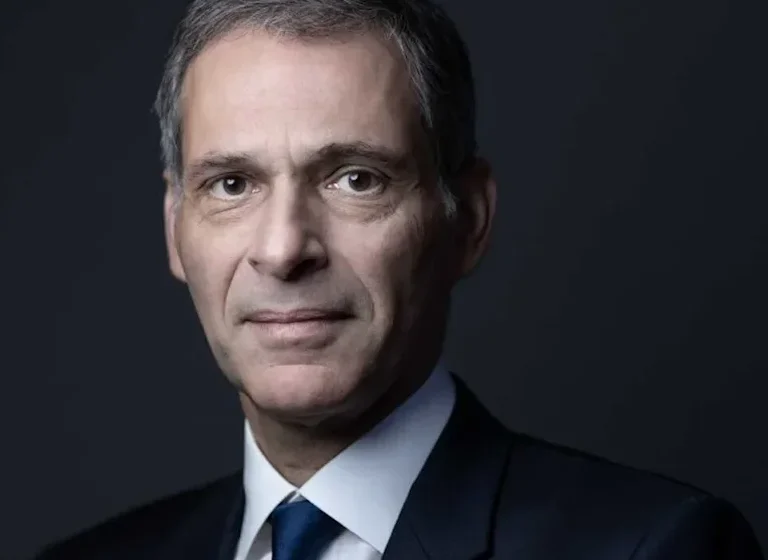

The international business landscape is influenced by executives who understand how to manage complex organizations, respond to economic changes, and make decisions that shape entire industries. Among the notable figures associated with global transportation and industrial development are Rodolphe Saadé and Greg Hayes. Although their professional backgrounds differ, both have built reputations through leadership positions in major international companies.
Rodolphe Saadé is best known for leading CMA CGM, a global shipping and logistics group headquartered in Marseille, France. Greg Hayes, meanwhile, is recognized for his leadership at United Technologies Corporation and Raytheon Technologies, now known as RTX, a major aerospace and defense company.
The growing interest in Rodolphe Saadé and Greg Hayes reflects an opportunity to examine two different approaches to international business leadership. Their careers offer useful perspectives on corporate expansion, organizational transformation, supply chain management, financial decision-making, and the challenges facing industries that operate across national borders.
However, an important distinction deserves attention: their professional histories do not establish a confirmed direct business partnership. Their relevance to one another is better understood through their respective industries and the broader global economy.
Who Is Rodolphe Saadé?
Rodolphe Saadé is a French-Lebanese business executive who serves as Chairman and Chief Executive Officer of CMA CGM Group. Born in Lebanon in 1970, he developed an international business background before joining the company founded by his father, Jacques Saadé.
He graduated from Concordia University in Montreal with a degree in business and marketing. Before entering the family business, he established a water dispenser company, gaining early entrepreneurial experience.
In 1994, he joined CMA CGM and began developing his understanding of the shipping industry through operational and commercial responsibilities.
His Rise Within CMA CGM
Saadé’s career developed through several positions involving international shipping operations. Between 1997 and 2000, he managed different shipping lines before taking responsibility for important transatlantic and transpacific routes.
These experiences provided valuable exposure to international trade, maritime transportation, customer relationships, and the operational challenges associated with moving goods between continents.
In 2010, he became Vice Chairman and joined the company’s Board of Directors. During the same period, he supervised a financial restructuring initiative, demonstrating his involvement in both operational management and corporate strategy.
He subsequently played an important role in the company’s international expansion.
In 2015, Saadé led the acquisition process involving Neptune Orient Lines, a Singapore-based container shipping company. He also helped negotiate the Ocean Alliance agreement, bringing CMA CGM together with other major shipping companies in a strategic operational arrangement.
In 2017, he became Chairman and CEO of CMA CGM, taking responsibility for the group’s long-term direction.
Expanding Beyond Traditional Shipping
One of the defining features of Saadé’s leadership has been the expansion of CMA CGM beyond its traditional maritime transportation activities.
The group has developed a broader presence across several areas:
- Container shipping and maritime transportation
- Freight forwarding and logistics
- Port operations and terminal management
- Air cargo transportation
- E-commerce logistics
- Warehousing and distribution
- International supply chain services
The acquisition of CEVA Logistics in 2019 was particularly important because it strengthened CMA CGM’s position in integrated logistics.
Additional acquisitions, including GEFCO and businesses connected to e-commerce delivery, helped expand its transportation and distribution capabilities.
This strategy reflects a wider objective: offering customers more complete transportation solutions instead of concentrating exclusively on maritime shipping.
Who Is Greg Hayes?
Gregory J. Hayes is an American business executive best known for his leadership at United Technologies Corporation (UTC) and RTX Corporation.
His professional background combines financial management, corporate strategy, acquisitions, and executive leadership. He built much of his career within UTC, eventually becoming one of the most influential executives in the aerospace and defense sector.
Hayes studied economics at Purdue University and holds a Certified Public Accountant qualification. His financial background played an important role in his approach to managing large industrial businesses.
From Financial Leadership to CEO
Hayes joined United Technologies in 1999 through its merger with Sundstrand Corporation. Over the following years, he assumed increasingly senior responsibilities.
Between 2008 and 2014, he served as UTC’s Chief Financial Officer. This position gave him significant experience in financial planning, investment decisions, corporate restructuring, and business performance management.
In 2014, he became CEO of United Technologies, later assuming the additional position of Chairman in 2016.
His leadership period involved major changes to the company’s structure and strategic priorities.
The Creation of RTX
One of Hayes’s most significant corporate achievements was helping transform United Technologies into a more focused aerospace and defense business.
Several major transactions shaped this transformation:
- The divestiture of Sikorsky Aircraft in 2015.
- The acquisition of Rockwell Collins in 2018.
- The separation of Otis Elevator Company and Carrier Corporation in 2020.
- The combination of UTC’s aerospace businesses with Raytheon Company in 2020.
The final transaction created Raytheon Technologies, which subsequently adopted the RTX name.
The resulting organization brought together major businesses including Collins Aerospace, Pratt & Whitney, and Raytheon.
Hayes served as RTX’s CEO from 2020 until May 2024, when Christopher Calio succeeded him. He subsequently became Executive Chairman before stepping down from that position in April 2025. His special advisory role concluded in January 2026. RTX+2
Greg Hayes’s Professional Activities in 2026
Hayes remains involved in corporate governance after leaving RTX’s executive leadership.
As of November 2026, he serves as Lead Independent Director of Phillips 66. He also serves on the board of Becton, Dickinson and Company, commonly known as BD.
These responsibilities allow him to contribute his experience in financial oversight, strategic planning, corporate governance, and executive decision-making to other major organizations. PSX+2
Are Rodolphe Saadé and Greg Hayes Business Partners?
One of the most important questions surrounding these two executives is whether they have an established professional relationship.
Based on the publicly available corporate biographies and company announcements reviewed, there is no verified evidence establishing a direct business partnership, joint venture, shared investment, or formal corporate arrangement between Rodolphe Saadé and Greg Hayes.
Their careers are primarily associated with different organizations. Saadé leads CMA CGM, while Hayes is recognized for his former leadership at United Technologies and RTX and his subsequent corporate board responsibilities.
This distinction is important because executives can operate within connected economic sectors without having a direct working relationship.
For example, international shipping companies and aerospace manufacturers both depend on transportation networks, industrial suppliers, global procurement, and reliable logistics systems. These shared business requirements create industry connections, not necessarily personal partnerships.
Why Are Their Names Discussed Together?
There are several reasonable explanations for comparing these executives.
First, both have managed organizations with substantial international operations and complex commercial responsibilities.
Second, their respective industries have important connections to transportation and global infrastructure.
Third, both have participated in major corporate transformation initiatives involving acquisitions, investments, organizational restructuring, and long-term business planning.
Their careers therefore provide an interesting comparison for readers researching international business leadership.
How Their Industries Connect
Although shipping and aerospace are different sectors, they are important parts of the same international economic system.
The relationship becomes clearer when examining how products, equipment, and industrial components move around the world.
Global Shipping and Logistics
CMA CGM operates within an industry responsible for transporting goods between international markets.
Container shipping supports businesses that import raw materials, manufacture products, distribute consumer goods, and maintain international supply chains.
The company’s broader logistics activities also demonstrate how transportation businesses are evolving beyond traditional maritime services.
Under Saadé’s leadership, CMA CGM has invested in air cargo, freight forwarding, terminal operations, and integrated logistics solutions.
This diversification helps the company address different customer requirements while responding to changes in international trade.
Aerospace and Defense Manufacturing
The aerospace industry operates through an extensive network of manufacturers, engineering companies, technology providers, and specialized suppliers.
RTX’s businesses illustrate this complexity.
Collins Aerospace develops aircraft systems and related technologies. Pratt & Whitney specializes in aircraft engines, while Raytheon focuses on defense technologies and systems.
These businesses depend on sophisticated manufacturing processes, long-term investment, research, and international supplier relationships.
Hayes’s former leadership at UTC and RTX involved overseeing organizations operating within this demanding industrial environment.
The Importance of Reliable Supply Chains
Both sectors demonstrate why supply chain reliability matters.
A shipping disruption can delay the delivery of essential materials, industrial equipment, and finished products. Similarly, a shortage of specialized aerospace components can affect aircraft production, maintenance schedules, and delivery commitments.
Companies operating in these industries must consider several factors:
- International trade regulations and customs requirements.
- Transportation costs and delivery schedules.
- Supplier reliability and production capacity.
- Geopolitical developments and regional instability.
- Technological changes and industrial innovation.
- Environmental standards and operational efficiency.
These shared challenges provide a useful framework for understanding the broader business relevance of both executives.
Comparing Their Leadership Strategies
The careers of these business leaders highlight two different approaches to managing large organizations.
Saadé’s strategy has emphasized expansion across transportation and logistics. Hayes’s corporate leadership, particularly at United Technologies, emphasized restructuring, portfolio management, and the consolidation of aerospace operations.
Neither approach is automatically superior. Their effectiveness depends on the company’s objectives, market conditions, financial resources, and competitive environment.
Saadé’s Expansion and Diversification Strategy
Saadé has pursued a strategy that brings different transportation services under a broader corporate structure.
The objective is to create an integrated logistics network capable of supporting customers at multiple stages of the supply chain.
This approach offers several potential advantages.
A broader service portfolio can create additional revenue opportunities, improve customer relationships, and reduce dependence on a single business segment.
However, diversification also introduces challenges. Managing maritime transportation, air cargo, warehousing, and distribution requires different technical capabilities and operational expertise.
Successful expansion therefore depends on careful investment decisions and effective management.
Hayes’s Restructuring and Consolidation Strategy
Hayes followed a different path during his leadership at UTC.
Rather than maintaining a wide collection of unrelated industrial businesses, he helped reshape the organization around aerospace and defense.
The separation of Carrier and Otis, followed by the merger with Raytheon, reflected a strategy focused on creating a more concentrated industrial enterprise.
This approach can offer several advantages:
- Greater strategic focus.
- More efficient allocation of capital.
- Stronger alignment between business divisions.
- Opportunities for operational integration.
- Increased attention to specialized technologies.
Nevertheless, large mergers and restructuring initiatives also involve financial, regulatory, cultural, and operational risks.
The success of such transactions depends on how effectively the combined organization integrates its operations and delivers long-term value.
Key Differences Between the Two Executives
A side-by-side comparison helps clarify their professional backgrounds and areas of influence.
| Category | Rodolphe Saadé | Greg Hayes |
|---|---|---|
| National background | French-Lebanese | American |
| Main business association | CMA CGM | United Technologies and RTX |
| Primary industry | Shipping and logistics | Aerospace and defense |
| Educational background | Business and marketing | Economics |
| Leadership focus | International expansion and diversification | Corporate restructuring and consolidation |
| Major corporate development | Expansion into integrated logistics | Creation of RTX |
| Current professional position | Chairman and CEO of CMA CGM | Lead Independent Director of Phillips 66 |
| Other board association | CMA CGM | Becton, Dickinson and Company |
The comparison illustrates how executives can approach business growth from different directions while facing similar management responsibilities.
What Business Leaders Can Learn From Their Careers
The professional experiences of Saadé and Hayes offer several lessons for entrepreneurs, executives, investors, and business students.
Long-Term Planning Matters
Major organizations cannot depend entirely on short-term decisions.
Both careers demonstrate the importance of developing strategies that account for changing markets, customer requirements, technology, and economic conditions.
Businesses need clear priorities and the flexibility to adjust them when circumstances change.
Strategic Acquisitions Require Careful Evaluation
Acquisitions can provide access to new markets, technologies, customers, and operational capabilities.
However, purchasing another company does not automatically create value.
Executives must consider financial risks, integration costs, cultural differences, and the long-term compatibility of the businesses involved.
The expansion of CMA CGM and the restructuring of UTC demonstrate different ways acquisitions and corporate transactions can influence business development.
Diversification Must Have a Clear Purpose
Entering new markets can create opportunities, but expansion without a coherent strategy can increase complexity.
Saadé’s development of a broader logistics business demonstrates the potential of diversification when different services support a connected commercial objective.
Hayes’s restructuring experience illustrates the alternative: concentrating resources on businesses that fit a clearer strategic direction.
Leadership Requires Adaptability
International businesses operate in environments affected by regulation, economic cycles, technology, and geopolitical developments.
Effective executives must understand these changes and adjust organizational priorities accordingly.
The ability to make difficult decisions while maintaining operational stability is an important element of successful corporate leadership.
The Future of Global Transportation and Industrial Leadership
The industries associated with these executives continue to experience significant changes.
Shipping companies are investing in more efficient vessels, alternative fuels, digital logistics platforms, and improved transportation networks. At the same time, aerospace manufacturers are developing advanced aircraft technologies, improving production capabilities, and responding to changing commercial and defense requirements.
For CMA CGM, future opportunities include expanding integrated logistics, strengthening air cargo operations, and improving the environmental performance of maritime transportation.
For the aerospace sector shaped by Hayes’s former leadership, important priorities include technological innovation, manufacturing efficiency, aircraft engine development, and long-term defense capabilities.
These developments demonstrate that business leadership is not simply about managing existing operations. It also involves preparing organizations for industries that may look very different in the coming decades.
Frequently Asked Questions
Who is Rodolphe Saadé?
Rodolphe Saadé is a French-Lebanese business executive and the Chairman and CEO of CMA CGM Group. He joined the family-founded company in 1994 and became its chief executive in 2017. He is known for expanding the group’s activities across shipping, logistics, air cargo, and transportation services.
Who is Greg Hayes?
Greg Hayes is an American business executive best known for leading United Technologies Corporation and RTX. He became CEO of UTC in 2014 and later led RTX following its formation in 2020. He currently serves as Lead Independent Director of Phillips 66 and as a director of BD.
Are Rodolphe Saadé and Greg Hayes business partners?
There is no verified public evidence establishing a direct business partnership between Rodolphe Saadé and Greg Hayes. Their professional careers are associated with different companies and industries. Their connection is primarily relevant as a comparison of international business leadership.
What company does Rodolphe Saadé lead?
Rodolphe Saadé leads CMA CGM Group, a major international shipping and logistics company headquartered in Marseille, France. Its operations include container shipping, freight forwarding, air cargo, port services, and integrated supply chain solutions.
What was Greg Hayes’s biggest business achievement?
One of Hayes’s most significant achievements was leading the transformation of United Technologies and helping create RTX through the 2020 combination of UTC’s aerospace businesses with Raytheon. The restructuring also involved major transactions, including the separation of Carrier and Otis.
Is Greg Hayes still the CEO of RTX?
No. Christopher Calio succeeded Hayes as RTX CEO in May 2024. Hayes subsequently served as Executive Chairman and then as a special advisor before his advisory role ended in January 2026.
What is Greg Hayes doing in 2026?
As of November 2026, Hayes serves as Lead Independent Director of Phillips 66 and a director of Becton, Dickinson and Company. His current responsibilities focus on corporate governance and board oversight rather than executive management at RTX.
What industries connect Rodolphe Saadé and Greg Hayes?
Their professional backgrounds relate to the wider global transportation and industrial economy. Saadé is associated with maritime shipping, logistics, and air cargo, while Hayes is known for aerospace manufacturing and defense. Both industries depend on international suppliers, transportation infrastructure, technology, and reliable supply chains.
How do their leadership approaches differ?
Saadé has emphasized expanding CMA CGM into a diversified transportation and logistics organization. Hayes focused on restructuring United Technologies and creating a more concentrated aerospace and defense business. Their approaches reflect different corporate objectives and industry requirements.
Why are these executives important to international business?
Both have held influential positions in major multinational organizations and participated in significant corporate transformations. Their experiences offer useful examples of strategic planning, financial management, international expansion, acquisitions, and organizational leadership.
Conclusion
Rodolphe Saadé and Greg Hayes represent two different approaches to leadership in the international business environment. Saadé has developed CMA CGM into a broader shipping and logistics organization, expanding its presence across multiple transportation services. Hayes, meanwhile, played an important role in reshaping United Technologies and establishing RTX as a major aerospace and defense company.
Although no confirmed direct business partnership between them has been established, their professional experiences provide an interesting comparison of corporate strategy and international industry development.
Their careers demonstrate that successful leadership requires more than managing daily operations. It involves understanding market changes, allocating resources effectively, making strategic decisions, and preparing organizations for future challenges.
For anyone interested in global business, transportation, logistics, and aerospace, examining these two executives offers valuable insight into how major companies evolve and compete in an increasingly interconnected economy.