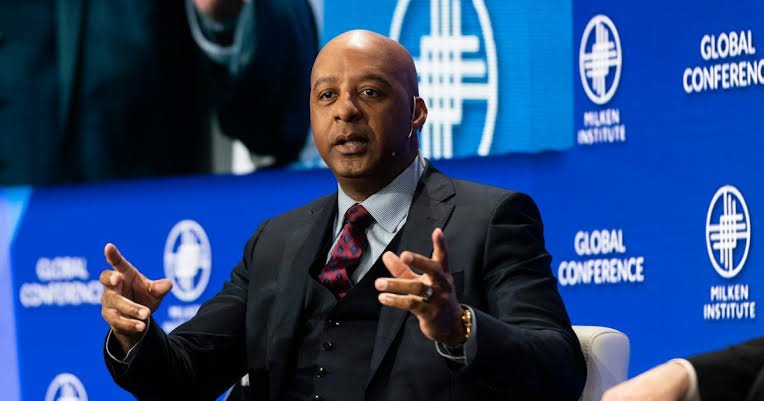
Greg Garland and Marvin Ellison Two Executive Careers That Offer Different Lessons in Leadership

Greg Garland and Marvin Ellison are prominent American business executives whose careers illustrate how leadership experience, operational knowledge, and strategic decision-making can shape large organizations. Although they have built their reputations in different industries, both offer useful examples of the challenges involved in managing complex businesses, responding to market changes, and creating long-term corporate value.
Garland is best known for his leadership at Phillips 66, a major energy manufacturing and logistics company. Ellison, meanwhile, is widely recognized for leading Lowe’s, the home improvement retailer, after holding senior positions at other major American retail companies.
Their professional backgrounds raise an interesting question: What can business leaders learn by comparing executives who operate in industries with very different customers, cost structures, and competitive pressures?
Understanding their careers provides a useful starting point. It also helps clarify what is publicly known about their professional connection, how their leadership responsibilities differ, and which aspects of their experience are relevant to today’s business environment.
Who Are Greg Garland and Marvin Ellison?
Greg Garland and Marvin Ellison are business leaders with extensive experience managing large organizations. Their careers have involved executive decision-making, operational oversight, organizational performance, and corporate governance.
However, their professional paths have followed different directions.
Greg Garland developed his career in the energy and chemicals sectors. He spent decades in technical, commercial, and executive positions before becoming chairman and chief executive officer of Phillips 66 in 2012. He subsequently served as executive chairman until 2024.
Marvin Ellison built his career in retail operations and management. Before joining Lowe’s, he held leadership positions at Target, The Home Depot, and J.C. Penney. He became Lowe’s president and CEO in 2018 and its chairman in 2021.
Their backgrounds demonstrate that executive leadership is not limited to one Greg Garland and Marvin Ellison professional discipline. Industry expertise matters, but the ability to coordinate people, allocate resources, assess risks, and establish priorities is equally important.
Greg Garland: A Career in Energy and Industrial Leadership
From Engineering to the Executive Suite
Greg C. Garland began his career at Phillips Petroleum Company in 1980 after earning a bachelor’s degree in chemical engineering from Texas A&M University.
His early work involved technical and commercial responsibilities, including engineering, sales, business development, and chemicals management. These experiences gave him exposure to the operational foundations of the energy and petrochemical industries.
Over time, Garland moved into increasingly senior positions. He served as president and CEO of Chevron Phillips Chemical Company from 2008 to 2010 before becoming senior vice president of exploration and production for the Americas at ConocoPhillips.
This progression combined technical expertise with experience in business planning, commercial operations, and executive management.
Leaders in capital-intensive industries often need to understand both the technical characteristics of their operations and the financial consequences of major decisions. Garland’s career reflects that combination.
Leadership at Phillips 66
Garland became chairman and CEO of Phillips 66 in 2012, following the company’s separation from ConocoPhillips. He led the company through June 2022 and continued as executive chairman until May 2024.
Phillips 66 operates across several interconnected areas, including refining, midstream transportation and logistics, chemicals, and marketing. Managing such a business requires coordination across operations that face different market conditions, investment needs, and regulatory requirements.
For an energy company, executive decisions may involve questions such as:
- How should capital be allocated among existing facilities, maintenance, and new projects?
- How can operational reliability and workplace safety be maintained?
- How should the company respond to changes in fuel demand and commodity prices?
- Which investments offer an appropriate balance of risk and potential return?
- How can environmental responsibilities and changing energy-market conditions be incorporated into long-term planning?
These are industry-wide management challenges rather than claims about any single decision Garland made. They help explain why experience in engineering, operations, and strategic planning can be valuable in the energy sector.
Board Service and Corporate Governance
Garland’s professional experience extends beyond his former executive responsibilities at Phillips 66. He has served on the board of Amgen and joined ExxonMobil’s board of directors in 2025.
Board service differs from running a company’s daily operations. Directors help oversee corporate strategy, risk management, executive accountability, and the interests of shareholders.
Garland’s background in energy markets and industrial operations provides a different perspective from the expertise of executives whose careers have centered on consumer products or retail businesses.
His career illustrates how specialized industry knowledge can remain relevant in corporate governance even after a leader leaves an executive position.
Marvin Ellison: A Career Built on Retail Operations
Experience at Target and The Home Depot
Marvin Ellison’s career developed in the retail industry, where operational efficiency and customer experience are closely connected.
He spent approximately 15 years in operational roles at Target before joining The Home Depot in 2002. At The Home Depot, he held several senior positions, including leadership responsibilities involving global logistics, regional operations, and U.S. stores.
These roles provided experience in managing extensive store networks and supply chains. Retail businesses must coordinate inventory, transportation, staffing, merchandising, and customer service while responding to changing shopping patterns.
A delay in distribution, an inventory shortage, or an inconsistent in-store experience can affect sales and customer loyalty. Retail executives therefore need to connect decisions made at headquarters with the realities of day-to-day store operations.
Ellison’s career demonstrates the value of understanding those practical details before taking responsibility for an entire organization.
Leadership at J.C. Penney and Lowe’s
Ellison became CEO of J.C. Penney in 2015 and chairman in 2016. In 2018, he moved to Lowe’s as president and CEO, later becoming chairman of the company’s board in 2021.
Lowe’s serves both do-it-yourself customers and professional customers, including contractors and other tradespeople. That creates a varied business environment in which product availability, knowledgeable service, fulfillment options, and pricing all matter.
The company must also compete in an increasingly connected retail environment. Customers may research products online, compare prices on their phones, visit stores to inspect merchandise, and expect convenient delivery or pickup.
For leadership teams, these expectations make several areas particularly important:
- Inventory management: Keeping the right products available where customers need them.
- Customer experience: Making shopping and project planning easier for different customer groups.
- Digital commerce: Connecting online browsing and ordering with physical stores and fulfillment networks.
- Supply chain performance: Moving products efficiently from suppliers to distribution centers and customers.
- Operational discipline: Improving execution while managing labor, transportation, and other costs.
These priorities help explain the demands placed on a large home improvement retailer’s executive leadership.
Ellison’s career is especially relevant to business managers interested in retail transformation, logistics, store operations, and the relationship between customer expectations and corporate strategy.
Greg Garland and Marvin Ellison: Key Differences
The most useful way to compare these executives is to examine the industries they know, the operational challenges they have faced, and the types of decisions their leadership roles require.
| Comparison area | Greg Garland | Marvin Ellison |
|---|---|---|
| Primary industry | Energy, refining, and chemicals | Retail and home improvement |
| Professional foundation | Chemical engineering and industrial business operations | Retail operations and management |
| Major leadership role | Former chairman and CEO of Phillips 66 | Chairman and CEO of Lowe’s |
| Previous executive experience | Chevron Phillips Chemical Company and ConocoPhillips | Target, The Home Depot, and J.C. Penney |
| Core operating environment | Industrial assets, energy markets, logistics, and capital investment | Stores, inventory, customer service, and retail supply chains |
| Key management considerations | Safety, operational reliability, capital allocation, and market risk | Customer experience, product availability, efficiency, and digital commerce |
The comparison highlights different areas of specialization rather than establishing that one executive is more effective than the other.
Garland’s background is closely associated with industrial operations and energy-market complexity. Ellison’s experience centers on retail execution, customer-facing operations, and the coordination of large store and distribution networks.
Both fields demand disciplined management, but the decisions involved are shaped by different business models.
What Leadership Lessons Can Business Professionals Learn From Their Careers?
1. Industry Knowledge Strengthens Strategic Decisions
A leader’s ability to understand how a business actually works can improve the quality of strategic planning.
In the energy industry, that may involve understanding facility performance, commodity exposure, infrastructure, and long-term investment requirements. In retail, it may mean recognizing how inventory, staffing, pricing, and fulfillment affect customer satisfaction.
The broader lesson is that strategic decisions become more practical when leaders understand the operational details behind financial results.
2. Operational Execution Matters as Much as Strategy
A well-designed business strategy is only useful if an organization can execute it consistently.
For an industrial company, execution may depend on reliable facilities, effective maintenance, and careful risk management. For a retailer, it may depend on product availability, dependable delivery, and a consistent customer experience.
Executives need systems that translate corporate priorities into measurable responsibilities throughout the organization.
This principle applies to businesses of nearly every size, from regional service providers to publicly traded corporations.
3. Leadership Requires Balancing Short-Term and Long-Term Priorities
Companies must meet immediate performance expectations without sacrificing their ability to compete in the future.
Short-term priorities may include controlling costs, improving service, or maintaining operational performance. Long-term priorities may involve infrastructure investment, technology, employee development, and adapting to changing customer or market needs.
Garland’s industrial background and Ellison’s retail experience illustrate different settings in which this balance matters.
The practical takeaway for managers is to evaluate decisions against both current results and their longer-term consequences.
4. Risk Management Must Reflect the Business Model
Not all business risks are the same.
Energy companies may face exposure to commodity-price movements, industrial safety incidents, regulatory requirements, and large capital commitments. Retailers may be more directly affected by inventory imbalances, shifting consumer demand, supplier disruptions, and competitive pricing.
Effective risk management begins by identifying the risks that matter most to a particular organization.
Leaders should then establish clear accountability, monitor relevant indicators, and prepare responses before problems become more difficult to manage.
5. Strong Governance Supports Accountability
Corporate governance helps define how decisions are made, how executives are evaluated, and how risks are overseen.
The experience of executives who have served in senior operating positions and on corporate boards shows why practical business knowledge can be useful in oversight roles.
For growing companies, the lesson is straightforward: decision-making responsibilities should be clear, financial reporting should be reliable, and leadership performance should be assessed against defined objectives.
Is There a Direct Professional Connection Between Greg Garland and Marvin Ellison?
People searching for Greg Garland and Marvin Ellison together may be looking for a shared business relationship, a comparison of their careers, or information about their personal backgrounds.
Their publicly documented career histories primarily concern different companies and industries. Garland’s best-known executive role was at Phillips 66, while Ellison’s leadership career includes Target, The Home Depot, J.C. Penney, and Lowe’s.
Their professional biographies do not establish a direct business partnership or joint venture between the two executives.
That distinction is important. Two business leaders can be relevant to the same discussion without having worked together or shared a formal corporate responsibility.
To verify a specific connection, readers should look for primary evidence, such as a joint company announcement, a shared board appointment, a documented transaction, or an official statement identifying their involvement in the same initiative.
Without such evidence, it is more accurate to compare their professional experience than to suggest a relationship that has not been established.
Why Their Careers Matter in Today’s Business Environment
The careers of Garland and Ellison are relevant because modern businesses operate under different but equally demanding forms of pressure.
Industrial companies must manage complex assets, substantial investments, regulatory obligations, and changes in energy markets. Retailers must respond to evolving shopping behavior, digital competition, supply chain challenges, and expectations for convenient service.
Both environments reward leaders who can interpret information, set priorities, allocate resources, and coordinate large teams.
Their careers also illustrate the importance of professional development. Garland progressed from engineering and technical business roles into executive leadership. Ellison built experience through a series of operational and management positions across major retailers.
Neither career followed exactly the same path, but both demonstrate how responsibility can expand through experience in increasingly complex business environments.
For aspiring executives, this is a useful reminder that leadership development is not solely about gaining a senior title. It also involves learning how organizations function, understanding the consequences of decisions, and developing the ability to work across departments.
For investors and business observers, the comparison offers another important lesson: executive experience should be evaluated in the context of the company’s industry, strategy, financial position, and operating requirements.
A leadership approach that works well in one sector should not automatically be assumed to produce identical results in another.
Frequently Asked Questions
Who is Greg Garland?
Greg C. Garland is an American energy-industry executive best known for serving as chairman and CEO of Phillips 66 from 2012 to 2022, followed by a term as executive chairman through 2024. His earlier career included senior positions at Chevron Phillips Chemical Company and ConocoPhillips.
Who is Marvin Ellison?
Marvin Ellison is an American retail executive who became president and CEO of Lowe’s in 2018 and chairman of its board in 2021. Before joining Lowe’s, he held senior leadership positions at Target, The Home Depot, and J.C. Penney.
Are Greg Garland and Marvin Ellison business partners?
Their publicly documented professional biographies do not establish a direct business partnership or joint venture. Their careers are more clearly connected through the broader topic of American corporate leadership than through a verified shared business undertaking.
What is the main difference between Greg Garland and Marvin Ellison?
The main difference is their industry experience. Greg Garland and Marvin Ellison centers on energy, chemicals, and industrial operations, while Ellison’s career focuses on retail management, logistics, store operations, and customer experience.
What leadership skills do they have in common?
Their careers demonstrate experience in senior management, operational oversight, strategic decision-making, and organizational leadership. The specific applications differ because energy companies and retailers face different financial, operational, and competitive challenges.
Why are these executives relevant to business students and professionals?
Their careers provide examples of how industry knowledge, operational experience, and increasing responsibility can prepare professionals for executive positions. Comparing their backgrounds can also help students understand why effective leadership must be adapted to the needs of a particular business.
Conclusion
Greg Garland and Marvin Ellison represent two distinct paths to executive leadership in American business. Garland’s career reflects decades of experience in engineering, energy, chemicals, and industrial management. Ellison’s career demonstrates the importance of operational expertise in retail, logistics, and customer-facing businesses.
Although their professional backgrounds differ, both offer useful perspectives on strategic planning, execution, risk management, and corporate accountability.
For readers exploring their careers, the most meaningful takeaway is not that one leadership model is universally superior. It is that effective executives understand their industries, make decisions with both immediate and long-term consequences in mind, and align organizational resources with business priorities.