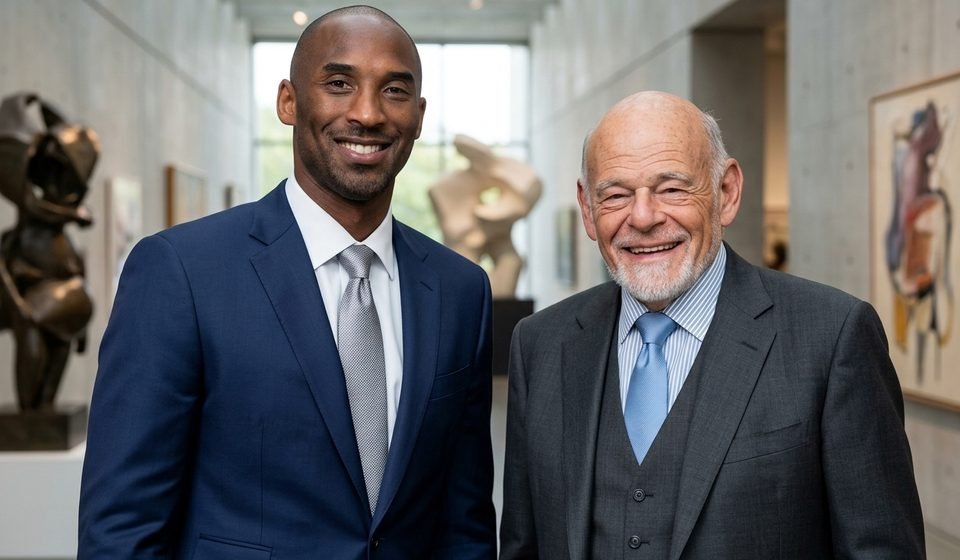
Kobe Bryant and Sam Zell What an NBA Legend and a Real Estate Billionaire Teach Us About Success

Success can take dramatically different forms. For some people, it means reaching the highest level of professional sports. For others, it means building companies, identifying undervalued assets, and making investment decisions that reshape entire industries. Kobe Bryant and Sam Zell followed very different paths, yet their careers offer an interesting way to examine ambition, discipline, calculated risk, and the lasting impact of individual decisions.
Bryant became one of the most recognizable basketball players in the world through his extraordinary career with the Los Angeles Lakers. Zell built his reputation as an influential real estate investor and entrepreneur, known for spotting opportunities in overlooked properties and navigating complicated market cycles. One operated in front of millions of fans, while the other built his influence through investments, acquisitions, and business negotiations.
There is no need to assume that the two men shared a personal relationship or worked together to find value in their careers. Their stories are compelling on their own. Considered side by side, they offer useful insights into how people develop expertise, manage uncertainty, compete under pressure, and build a legacy that extends beyond their original profession.
Who Were Kobe Bryant and Sam Zell?
Understanding their backgrounds helps explain why their careers are relevant to conversations about leadership and achievement.
Kobe Bryant: A Basketball Icon Who Expanded Into Business
Kobe Bryant was an American professional basketball player who spent his entire 20-season NBA career with the Los Angeles Lakers. Drafted in 1996, he became a five-time NBA champion, a two-time NBA Finals MVP, and the league’s 2008 Most Valuable Player.
His achievements extended beyond championships and individual awards. Bryant earned a reputation for intense preparation, technical precision, and an ability to perform in high-pressure situations. His competitive approach influenced athletes across multiple sports and helped establish him as a prominent figure in popular culture.
Bryant also pursued opportunities beyond basketball. Through Kobe Inc., he explored business ventures, investments, and brand-building initiatives. One of his most notable projects was Granity Studios, a multimedia company focused on storytelling across books, film, television, and other formats.
His investment in the sports drink company BodyArmor, made before the brand’s eventual acquisition by Coca-Cola in 2021, demonstrated his interest in identifying opportunities outside professional basketball. Bryant’s post-playing career reflected an ambition to apply his knowledge of competition, branding, and performance to a wider business environment.
His life ended in a helicopter crash in January 2020, but his influence on sports, entrepreneurship, and youth development continues to shape how many people understand his legacy.
Sam Zell: An Investor Known for Contrarian Thinking
Sam Zell was an American billionaire investor and entrepreneur best known for his work in real estate. He founded Equity Group Investments, the investment firm through which he pursued opportunities across real estate, logistics, healthcare, energy, and other industries.
Zell built his reputation by looking for opportunities that other investors overlooked. In real estate, he became particularly associated with acquiring properties when market conditions were unfavorable, improving their economic potential, and positioning investments to benefit when circumstances changed.
His career included a major role in the growth of publicly traded real estate investment trusts, commonly known as REITs. These investment structures allow individuals to gain exposure to income-producing real estate without directly owning and managing individual properties.
Zell also became widely known for his involvement in the acquisition of Equity Office Properties Trust by Blackstone in 2007, a transaction that ranked among the largest real estate deals of its era. After that sale, he acquired Tribune Company, the media business associated with newspapers such as the Chicago Tribune and the Los Angeles Times.
Zell died in May 2023. His career remains a significant case study in entrepreneurial risk-taking, real estate investing, market timing, and the challenges of managing businesses through changing economic conditions.
What Their Careers Reveal About Entrepreneurship
1. Discipline Creates a Competitive Advantage
Bryant’s basketball career illustrates how sustained practice can help turn natural ability into exceptional performance. He became known for studying opponents, refining individual skills, and preparing for difficult situations before they arose.
His approach offers a practical lesson for entrepreneurs: consistent preparation can be more valuable than occasional bursts of motivation.
A business owner, for example, can apply this principle by studying customer behavior, reviewing competitors, improving products, and developing contingency plans before problems emerge. Just as an athlete cannot rely on talent alone, a company cannot depend entirely on an appealing idea.
Bryant’s post-basketball career also reflected this commitment to learning. Reporting by The Washington Post documented his work as an investor, filmmaker, author, and entrepreneur after retiring from the NBA. The Washington Post+1
2. Contrarian Thinking Can Reveal Opportunities
Zell’s investment philosophy offers a different but complementary lesson. He frequently looked for value in situations that other investors viewed negatively.
In real estate, an underperforming property may attract little interest because it needs repairs, has weak occupancy, or faces unfavorable market conditions. An experienced investor may recognize that the property’s problems are manageable and that its location or underlying assets justify further investigation.
However, buying something unpopular is not automatically a sound investment. The opportunity must be supported by realistic financial projections, a clear understanding of the risks, and a credible plan for improving performance.
Zell emphasized the importance of understanding downside risk, maintaining liquidity, and questioning conventional thinking. His investment principles are discussed in materials from the University of Chicago Law School and Northwestern University’s Kellogg School of Management. University of Chicago Law School+1
For modern entrepreneurs, the practical lesson is to distinguish between an overlooked opportunity and a genuinely bad investment.
3. Long-Term Thinking Requires Adaptability
Bryant and Zell both pursued opportunities beyond the fields that initially made them famous.
Bryant expanded into venture capital, media production, and consumer brands. Zell invested across real estate and other industries, including logistics, energy, and healthcare.
Their experiences demonstrate that professional growth does not necessarily end when someone reaches a major milestone. Retirement, market disruption, or changes in consumer behavior can create opportunities to develop new skills and enter different markets.
Consider a small business owner whose original product loses demand. Rather than continuing with an outdated model, the owner might use existing expertise to develop a new service or reach a different customer group.
The key is to recognize when an established strength can be transferred to a new environment. Adaptability works best when it builds on real knowledge rather than chasing every new trend.
How Kobe Bryant and Sam Zell Approached Risk Differently
Risk is unavoidable in both sports and business, but the consequences and methods of managing it vary considerably.
Bryant faced competitive risks. Every game involved uncertainty, and every season required him to perform against opponents who were equally determined to win. His preparation, physical conditioning, and willingness to take responsibility during difficult moments were central features of his professional identity.
Zell faced financial and operational risks. Real estate investments could be affected by interest rates, debt obligations, economic downturns, vacancies, and changing demand. An investment that appeared attractive under one set of conditions could become financially damaging if those conditions changed.
The difference is important because the same approach to risk does not work in every situation.
| Consideration | Kobe Bryant’s career | Sam Zell’s career |
|---|---|---|
| Primary environment | Professional basketball and entertainment | Investment and business |
| Main challenge | Competing consistently against elite opponents | Evaluating opportunities under financial uncertainty |
| Preparation | Training, film study, and technical development | Financial analysis, market research, and asset evaluation |
| Risk management | Physical readiness, decision-making, and competitive execution | Capital allocation, liquidity, and downside analysis |
| Long-term objective | Athletic excellence and a broader entrepreneurial legacy | Investment returns, business development, and asset value |
This comparison is illustrative rather than a claim that the two men used identical methods or directly influenced each other’s decisions.
For entrepreneurs, the broader lesson is to identify the type of risk involved before deciding how to respond. Competitive risk may call for better preparation, while financial risk may require conservative assumptions, sufficient cash reserves, and limits on potential losses.
The 2016 SALT Conference: Their Documented Professional Connection
The clearest documented connection between Kobe Bryant and Sam Zell is their inclusion in the speaker lineup for the 2016 SkyBridge Alternatives Conference, widely known as SALT, in Las Vegas.
The event brought together participants from finance, alternative investments, entrepreneurship, entertainment, and other fields. Its program featured Bryant in a session titled “Game On: Sitting Courtside with Kobe Bryant,” while Zell participated in a separate session titled “A Tale of Two Titans: A Conversation with T. Boone Pickens and Sam Zell.” Editorial Magazine+1
Their participation provides a concrete explanation for why the two names may appear together in searches related to business, leadership, and entrepreneurship.
However, an appearance at the same conference does not establish a personal friendship, a private meeting, or a commercial partnership. The available conference information confirms a shared professional setting, not a joint business venture.
That distinction matters when researching public figures. Reliable biographical writing should separate verifiable events from assumptions about personal relationships.
What Modern Professionals Can Learn From Their Legacies
The careers of Bryant and Zell offer several practical lessons for people building businesses, advancing professionally, or developing specialized skills.
Develop Expertise Before Chasing Recognition
Public attention can create opportunities, but expertise gives people a foundation for taking advantage of them.
Bryant’s reputation was built through years of professional competition. Zell’s investment career developed through decades of business activity and market experience.
For someone starting a company, this means focusing on product quality, customer service, and financial fundamentals before prioritizing visibility. Recognition is more useful when it reflects genuine capability.
Make Decisions Based on Evidence
Confidence is valuable, but confidence alone does not make a decision sound.
An entrepreneur should test assumptions, examine alternatives, and consider what might go wrong. A real estate investor should understand operating expenses, financing costs, and the conditions required to generate an acceptable return.
The same principle applies to career development. Before pursuing a new opportunity, evaluate the required skills, available resources, potential benefits, and realistic alternatives.
Treat Setbacks as Information
Professional setbacks can reveal weaknesses that success sometimes hides.
An athlete may need to change a training routine after a poor performance. A company may need to reconsider pricing after customers reject a product. An investor may need to reassess a valuation when market conditions change.
The useful response is neither to ignore the setback nor to assume that one failure defines the future. Instead, examine what happened, identify the factors within your control, and adjust the strategy.
Build Something That Outlasts You
Bryant’s influence continues through basketball culture, his creative work, and the charitable initiatives associated with his family and legacy. Zell’s influence remains visible through his investment businesses and support for entrepreneurial education. The Washington Post+1
For business owners, legacy can take many forms. It may mean developing a company that creates lasting employment, mentoring future leaders, supporting a community, or building a product that continues to serve customers.
The central idea is that achievement becomes more meaningful when it creates value beyond an individual’s immediate success.
Frequently Asked Questions
5. What was Kobe Bryant known for outside basketball?
Bryant pursued venture capital, media production, storytelling, and consumer-brand investments. His ventures included Bryant Stibel, Granity Studios, and an early investment in BodyArmor.
6. What was Sam Zell best known for?
Zell was best known for real estate investing and for founding Equity Group Investments. He also played a significant role in the development of large real estate investment trusts and invested in businesses across several industries.
7. What leadership lessons can be learned from Kobe Bryant?
His career highlights the importance of preparation, consistent practice, accountability, adaptability, and a willingness to improve. These principles can be applied to professional development and business management, although results depend on the circumstances.
8. What can entrepreneurs learn from Sam Zell’s investment philosophy?
Entrepreneurs can learn to question conventional assumptions, evaluate opportunities carefully, understand downside risk, and maintain sufficient financial flexibility. Contrarian thinking is most useful when supported by research and sound judgment.
9. Were Kobe Bryant and Sam Zell both entrepreneurs?
Yes, although their original careers were different. Bryant became a basketball star before pursuing investments and media ventures, while Zell built his career primarily as an investor and business entrepreneur.
10. When did Kobe Bryant and Sam Zell die?
Bryant died on January 26, 2020, at age 41. Zell died on May 18, 2023, at age 81.
11. Did Sam Zell invest in Kobe Bryant’s businesses?
The sources reviewed for this article do not establish that Zell invested in Bryant’s businesses. A shared conference appearance is not evidence of an investment relationship.
12. Why are their names associated with leadership and success?
Their careers represent different approaches to professional achievement. Bryant demonstrated the value of preparation and competitive discipline, while Zell became known for evaluating investments, identifying opportunities, and managing business risk.
13. What was the SALT Conference?
SALT is a conference focused on finance, alternative investments, and broader business issues. Its speaker lineup has included people from investment, technology, entertainment, and other professional fields.
14. What is the main difference between Bryant’s and Zell’s legacies?
Bryant’s legacy centers primarily on basketball, sports culture, and his later creative and entrepreneurial ventures. Zell’s legacy centers on real estate, investment management, corporate development, and support for entrepreneurship.
Conclusion
Kobe Bryant and Sam Zell achieved success in very different arenas. Bryant became one of basketball’s defining figures through elite performance, sustained preparation, and an entrepreneurial second act. Zell established himself as a major investor through real estate expertise, contrarian thinking, and a willingness to evaluate opportunities that others overlooked.



Comments are closed.
[…] Kobe Bryant and Sam Zell What an NBA Legend and a Real Estate Billionaire Teach Us About Success […]